

Executive Summary
Two-thirds of organizations managing working capital are operating with fragmented data, limited visibility and insufficient funding resilience as portfolio complexity outpaces infrastructure. GSCF identifies four structural gaps that can increase risk as working capital programs scale: Visibility, Credit, Buyer Adoption and Integration.
- Visibility gaps can obscure aggregate portfolio exposure. Organizations may have strong insight into individual programs while still lacking a connected view across funders, counterparties and financing structures.
- Credit gaps can restrict access and diversification. Traditional funding parameters may exclude viable counterparties that could be served through alternative capital or different funding structures.
- Buyer adoption gaps can limit portfolio performance. Low participation can leave liquidity untapped and increase concentration among a smaller group of counterparties.
- Integration gaps can delay decisions. Disconnected systems and workflows increase the time required to move from new information to funding or risk action.
- Closing the gaps requires connected portfolio control. Bringing programs, data, workflows and capital together gives organizations greater visibility, consistency and oversight as working capital portfolios scale.
Four Structural Gaps Reshaping Working Capital Risk
As portfolios expand across funders, geographies and financing structures, the distance between what organizations know and how quickly they can act continues to grow.
Closing that gap requires looking beyond individual programs and across four areas that create structural risk: Visibility, Credit, Buyer Adoption and Integration. Together, they provide a framework for evaluating whether an organization’s operating model is keeping pace with the complexity of its working capital portfolio.
1. The Visibility Gap : Building a complete view of portfolio risk
As working capital portfolios expand, information often becomes increasingly fragmented across different programs, funders, platforms, geographies and financing structures.
Teams may have strong visibility into individual programs while still lacking a connected view of aggregate exposure across the broader portfolio. The immediate impact may be slower reporting, but the larger concern is that risk can build before anyone has a complete picture.
GSCF’s 2026 research with The Working Capital Forum found that 43% of organizations still rely on fragmented data that requires manual consolidation before decisions can be made, with another 14% dependent on partial consolidation and periodic reporting. Nearly two-thirds of organizations fall into what the research classifies as “Opaque and Exposed” – combining weak visibility with limited funding resilience.
Without portfolio-level transparency, individual programs may appear to operate within approved limits while aggregate exposure across the portfolio exceeds institutional risk appetite.
Closing the Visibility Gap requires a connected portfolio view that allows organizations to see exposures across programs, counterparties and funding structures, identify emerging concentrations earlier and understand how decisions in one area may affect the broader portfolio.
The question to consider:
Can we see our total working capital exposure across programs, funders and structures when decisions need to be made?
2. The Credit Gap : Expanding access while maintaining control
Supply chain resilience depends on more than an organization’s strongest counterparties. It also depends on the middle-market suppliers and buyers that keep the whole ecosystem moving every day.
Yet many businesses continue to face barriers to accessing trade finance. The IMF’s Global Financial Stability Report has documented how tighter bank lending conditions push viable borrowers toward alternative funding sources - not because of credit quality, but because conventional bank models were not designed to efficiently serve a wider range of credit profiles. The persistence of that dynamic points to a structural challenge, not a temporary one.
The implications extend beyond reduced access to financing. Excluding these counterparties can increase concentration among a smaller group of participants, weaken supply chain resilience and limit opportunities to build a more diversified working capital portfolio.
Organizations are therefore looking at how they can expand access to funding while maintaining the controls and oversight required to manage risk effectively. Increasingly, that means combining bank funding with alternative capital and co-origination models that can accommodate a broader range of counterparties without compromising portfolio oversight.
The objective is not to eliminate exposure altogether, but to make more informed capital allocation decisions based on a complete understanding of the portfolio.
The question to consider:
Are our funding parameters excluding strategically important counterparties that could be served through a different capital structure?
3. The Buyer Adoption Gap : Connecting participation to portfolio performance
Every working capital program depends on participation. Even a well-designed and well-funded program delivers limited value if eligible participants never fully enroll.
As programs expand across business units, regions and counterparties, driving participation can become more complex. Participants need to understand the value of the program, while communication, documentation and onboarding requirements can create additional friction.
Our 2026 research with The Working Capital Forum reinforces the importance of this challenge, with counterparty onboarding complexity emerging as one of the most frequently cited operational risks. Addressing the gap requires more than simplifying onboarding. Buyers also need a clear reason to engage, whether through early payment opportunities, extended terms or other benefits that support their working capital objectives.
Low participation may initially appear to be an adoption challenge, but it can have broader portfolio implications. When only a portion of eligible counterparties participates, liquidity remains trapped, funding becomes concentrated among the same buyers and the portfolio may never achieve the diversification it was designed to deliver.
Organizations looking to scale participation need to address both sides of the equation: a compelling reason to participate and a simple path to enrollment. That means clearly communicating the value of the program, simplifying the participant experience, standardizing onboarding and removing unnecessary friction.
Participation, therefore, should be viewed not only as a measure of program adoption, but also as an important component of portfolio resilience.
The question to consider:
Are we giving eligible participants a compelling reason to participate and making it easy for them to do so?
4. The Integration Gap : Shortening the distance between insight and action
In working capital, having access to information is only part of the equation. Organizations also need to be able to act on that information quickly.
Working capital teams often spend significant time gathering, reconciling and validating invoices, funding and exposure data across disconnected systems before decisions can be made.
Our 2026 research with The Working Capital Forum found that while 59% of organizations have integrated their core systems or achieved high integration supported by automated controls, not a single respondent reported the most advanced level of integration: full connectivity supported by analytics and scenario capabilities.
Disparate systems contribute to the challenge, but the larger issue is the delay they create in decision-making. Organizations are increasingly looking to shorten the time between insight and action by connecting data, workflows and approvals across the portfolio.
When information moves more seamlessly, exposures can become visible sooner, funding decisions can happen faster, and teams are better positioned to respond before emerging issues become larger risks.
The value of greater integration isn’t speed alone. It gives organizations access to connected information while there is still time to act on it.
The question to consider:
How long does it take us to move from new information to a funding or risk decision?
Assessing the Gaps
The four gaps provide a practical framework for evaluating whether an organization’s working capital infrastructure is keeping pace as programs scale.
These challenges are also interconnected. Limited integration can make it harder to achieve portfolio-level visibility. Poor visibility can lead organizations to take a more conservative approach to credit. Restrictive funding structures or difficult onboarding can limit participation, which in turn can increase concentration.
Addressing one gap in isolation may provide incremental improvement, but it does not necessarily solve the broader challenge.
Moving Toward Connected Portfolio Control
Closing these gaps requires organizations to think differently about how working capital programs are managed.
Historically, individual programs have often been managed through separate systems, processes and funding structures. That approach becomes more difficult to sustain as portfolios grow in size and complexity.
A more connected operating model brings programs, data and workflows together so organizations can manage working capital at the portfolio-level rather than through a collection of individual programs.
This evolution involves moving from fragmented information and processes toward greater connectivity, consistent controls and more timely decision-making. The goal is not simply to collect more data or automate more processes. It is to give decision-makers a clearer understanding of the portfolio and greater control over how capital is deployed.
Closing the Gaps
Working capital risk can develop through issues that appear relatively manageable when viewed independently, whether it’s a fragmented report, a disconnected workflow, a supplier that cannot access funding or a buyer that never completes enrollment.
As portfolios scale, these issues can combine to create structural gaps that limit visibility, increase complexity and make emerging risk more difficult to identify.
Organizations addressing this challenge are building operating models around portfolio-level transparency, broader capital access, simplified participation and more connected decision-making. These capabilities can help close the Visibility, Credit, Buyer Adoption and Integration gaps before they become measurable business risks.
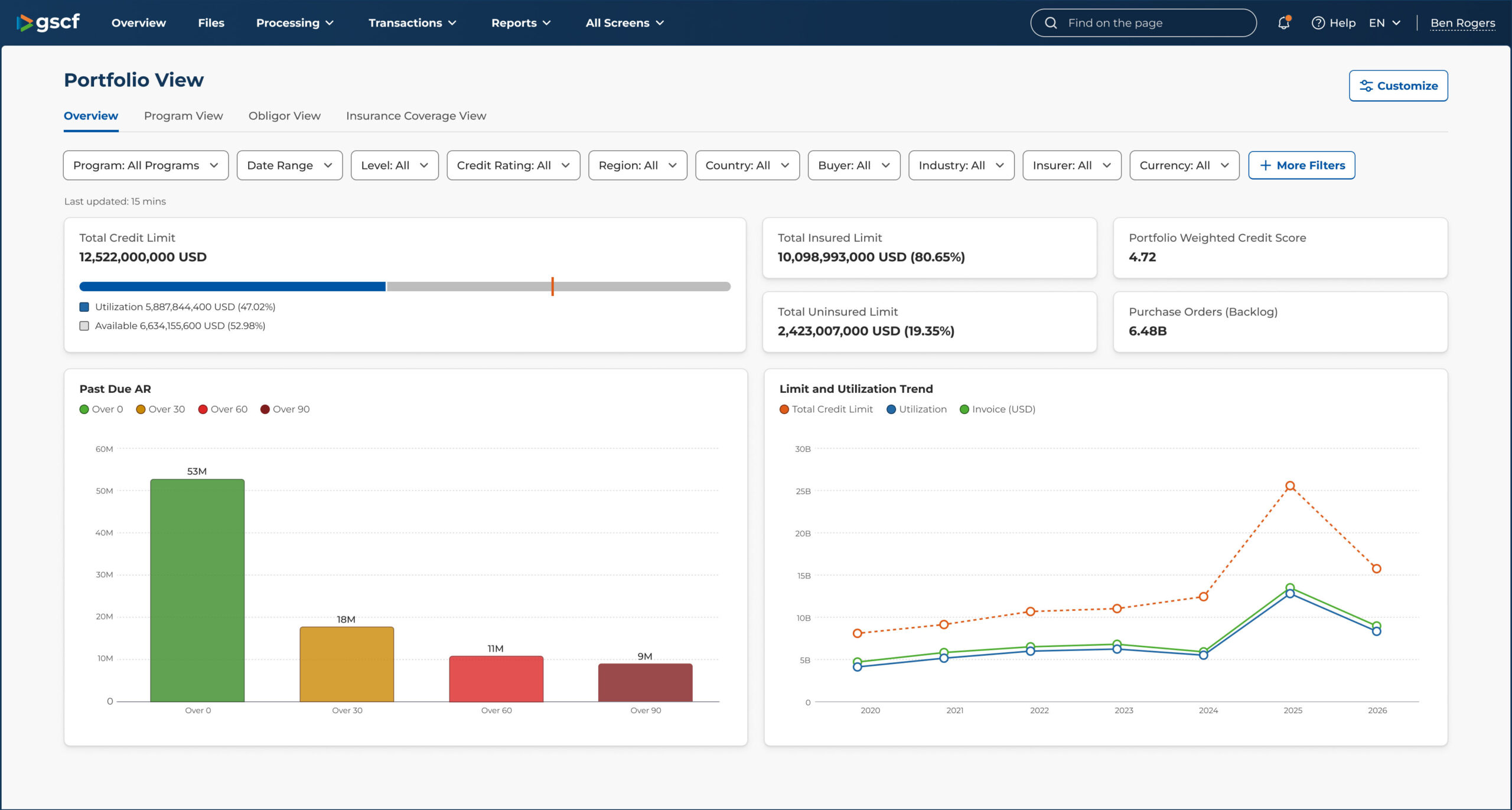
GSCF’s C4: Connected Capital Control Center, was built to support this approach through a single connected environment for originating, managing and analyzing working capital programs. By connecting programs, data, workflows and alternative and bank capital, C4 helps organizations manage growing working capital portfolios with greater consistency and oversight.
As working capital becomes more complex, effective risk management will increasingly depend not only on evaluating individual exposures, but also on having the infrastructure and information needed to understand and manage risk across the portfolio.
Ready to close the Visibility, Credit, Buyer Adoption and Integration gaps across your working capital portfolio? See how C4 helps organizations manage working capital at scale.
Frequently Asked Questions
- What are the four structural gaps in working capital risk? The four structural gaps are Visibility, Credit, Buyer Adoption and Integration. Together, they provide a framework for assessing whether an organization’s working capital infrastructure is keeping pace as programs grow in size and complexity.
- Why is portfolio-level visibility important in working capital? Portfolio-level visibility provides an aggregated view across working capital programs, funders, counterparties and financing structures. This helps organizations better understand aggregate exposure and identify emerging concentrations or risks that may not be visible when programs are managed individually.
- How can alternative capital, or non-bank financing, help address working capital funding gaps? Alternative capital, or non-bank financing, can complement traditional bank funding when organizations need greater flexibility or funding coverage. Combining alternative capital and bank capital can support a broader range of counterparties, regions and risk profiles while creating a more resilient and diversified financing structure.
- Why is buyer adoption important to working capital program performance? Working capital programs depend on participation to achieve their intended liquidity and diversification benefits. Simplifying onboarding, reducing friction and clearly communicating program value can help eligible participants successfully enter and use programs.
- How does integration support working capital risk management? Greater integration connects systems, data and workflows, helping organizations move from information to action more quickly. Centralized, real-time visibility and portfolio-level intelligence can support more timely, data-driven funding and risk decisions.