

Tag: Office of the CFO

  • GSCF Launches C4: Connected Capital Control Center

    GSCF Launches C4: Connected Capital Control Center

    Delivering Visibility and Control to Corporates, Banks & Asset Managers

    RELEASE DATE: 26 March, 2026, 9:00 am EDT   

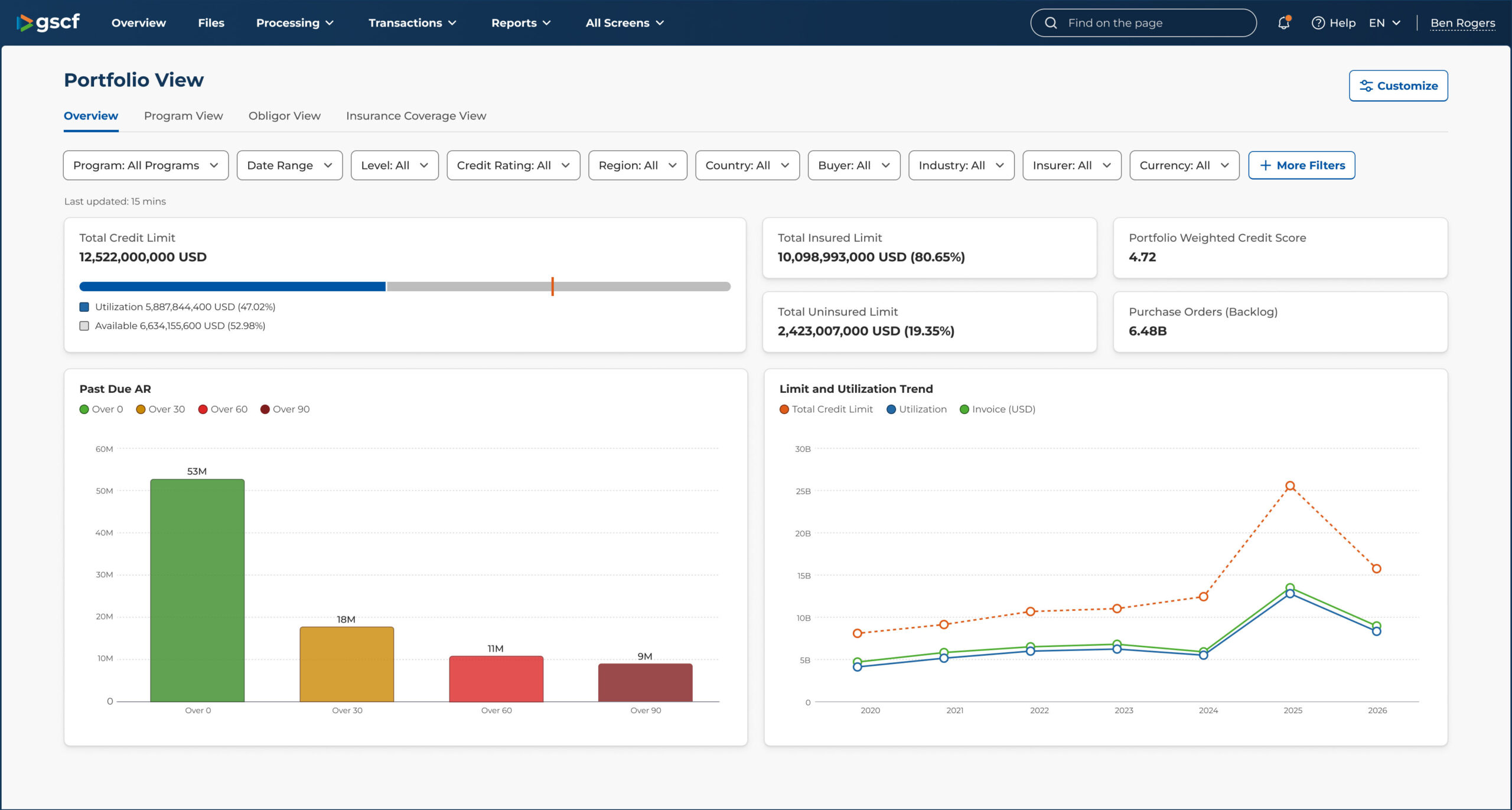
    NEW YORK, March 26, 2026 – GSCF, a leading global provider of working capital solutions, today announced the launch of Connected Capital Control Center (C4) – a servicing platform designed to help banks, asset managers and enterprise corporates originate, manage and analyze working capital with greater visibility, control and confidence across multiple programs.

    Built to support GSCF’s Connected Capital ecosystem and the broader market landscape, C4 addresses a growing market need: organizations are deploying multiple working capital programs across regions, funders, insurers and service providers, yet lack a single source of truth to track exposure, liquidity, cost and risk across their entire portfolio of programs.

    C4 consolidates program data and workflows into one unified control layer for programs serviced by GSCF or external providers, enabling financial institutions and enterprises to scale working capital more efficiently while reducing operational friction and risk.

    “As working capital portfolios grow more complex, fragmented views and manual oversight aren’t sustainable,” said Doug Morgan, Chief Executive Officer of GSCF. “C4 brings portfolio-level clarity to enterprises and their funding partners – so decisions can be made with confidence, limits can be enforced proactively, and working capital can be deployed more strategically across the global ecosystem.”

    C4 for Enterprise Corporates: Advanced Intelligence for the Office of the CFO
    For global enterprises relying on multiple working capital programs across regions, funders and administrators to drive liquidity and fuel growth, C4 provides a single, aggregated view of all working capital activity to eliminate data silos and enable centralized oversight.
    Key capabilities for corporates include:

    • Aggregated Data Views: A single source of truth consolidating all working capital programs, regardless of funder or platform
    • Portfolio-Level Intelligence: Holistic visibility across regions, buyers, suppliers and counterparties to support CFO- and Treasurer-level decisioning
    • Cross-Funder Transparency: Clear insight into funding flows, utilization and pricing across multiple banks and capital partners
    • Global Operational Workflows: Standardized and automated processes designed for multi-region, multi-funder environments
    • Exposure and Concentration Management: Program- and portfolio-level analytics to identify risk, adjust limits and optimize capital allocation

    By unifying data and decisioning at the portfolio level, C4 allows enterprises to move beyond reactive reporting and manage working capital as a strategic asset.

    C4 for Banks: Scaling Working Capital with Confidence and Control
    For trade finance and structured working capital teams, C4 delivers real-time visibility and embedded controls across multi-program and multi-funder portfolios to enable faster origination, stronger governance and scalable growth.
    Key capabilities for banks include:

    • Portfolio-Level Visibility: A consolidated, real-time view of exposure across obligors, regions, insurers and structures
    • Built-In Limit Management: Embedded credit limits, concentration thresholds, alerts and automated “pause” mechanisms
    • Streamlined Accounts Receivable: Standardized AR processes that scale from simple programs to complex, insured structures
    • Co-Origination and Extended Capacity: A unique combination of servicing expertise and funding capabilities that expands balance-sheet flexibility

    C4 empowers banks to shift from a model of program-by-program oversight to true portfolio management, reducing blind spots while increasing confidence in the ability to grow with efficiency and discipline.

    A Control Center Built for Scale, Not Silos
    Unlike today’s working capital landscape that can be fragmented across operations, technology and data, C4 is designed as a portfolio-level control layer that integrates technology with GSCF’s world-class managed services. Backed by more than 30 years of experience operating complex working capital programs globally, GSCF embeds operational precision directly into the platform – allowing clients to offload complexity while fully retaining control.

    “C4 addresses the needs of banks and enterprises today while supporting their growth across multiple programs, partners and jurisdictions,” said Shannon Dolan, Chief Product Officer of GSCF. “By consolidating data, limits, workflows and decisioning into one control center, C4 will help teams act faster, reduce risk and continuously optimize working capital performance at scale.”

    “The evolution of working capital management is moving beyond process efficiency toward liquidity orchestration. As enterprises and their financial partners deploy programs across an increasingly complex ecosystem of funders, regions and structures, the demand for portfolio-level visibility and control is intensifying. C4 reflects where the market is heading – a unified control layer that enables CFOs and Treasurers to manage liquidity not just as an operational necessity, but as a driver of business performance and resilience,” said Senior Research Director, IDC Enterprise Applications, Kevin Permenter.

    About GSCF

    GSCF is the leading global provider of working capital solutions. The Company enables corporates and financial partners to accelerate growth, unlock liquidity and manage the risk and complexity of the end-to-end working capital cycle. We originate, manage and analyze working capital programs through our innovative Working Capital as a Service offering, combining the power of a configurable and comprehensive technology platform, expert services and a Connected Capital ecosystem of alternative capital solutions and bank capital. GSCF’s team of working capital experts operates in over 75 countries to solve global working capital efficiency challenges. Visit www.gscf.com to learn more.

  • From Revolver Strain to Strategic Flexibility: How Growth Corporates Unlock Liquidity

    From Revolver Strain to Strategic Flexibility: How Growth Corporates Unlock Liquidity

    Growth companies face a constant balancing act. On one hand, sponsors demand aggressive expansion; on the other, lenders watch leverage and liquidity closely. Too often, CFOs and treasurers are forced to use their revolver for routine working capital needs—when that facility should be reserved for strategic initiatives or true emergencies.


    That’s where alternative capital solutions come in. By unlocking liquidity trapped in receivables and payables, finance leaders can take pressure off their revolvers, maintain sponsor confidence, and keep capital available for growth or M&A activity.

    The Revolver Pressure Problem
    Consider a mid-sized telecom company scaling digital services while investing in IT infrastructure. Despite strong growth, day-to-day liquidity needs forced repeated revolver draws, triggering concerns from its lenders. By introducing a receivables financing program, the company freed up liquidity without touching the revolver, preserving borrowing capacity for expansion.
    In another case, a packaging manufacturer growing in pet food faced earnings volatility after a customer bankruptcy. Alternative capital solutions allowed the CFO to fund M&A activity without leaning on the revolver, improving optics with both sponsors and creditors.

    Growth Without Revolver Dependency
    A European industrial group recently implemented a payables finance program across divisions, creating liquidity to fund transformation initiatives while keeping its revolver fully available. This not only improved the company’s balance sheet optics but also reassured lenders ahead of a potential exit event.

    Meanwhile, a global packaging firm carrying high leverage had access to an unused ABL facility, but its rigid terms offered little flexibility. By shifting to an alternative capital program, the CFO unlocked faster, more flexible working capital while maintaining revolver headroom for larger, strategic needs.

    Strategic Growth Requires Strategic Capital
    From tech acquisitions to supply chain expansions, strategic moves require working capital that can be deployed quickly and flexibly. Alternative capital makes this possible by funding growth through receivables and payables programs, not revolver draws – strengthening balance sheet optics and preserving sponsor confidence.

    Why Now?

    • Economic and geopolitical uncertainty, volatile supply chains and postponed IPOs all make traditional financing less reliable. The Office of the CFO needs solutions that are:
    • Resilient: Liquidity that flexes with growth cycles
    • Responsive: Working capital that deploys quickly when opportunities arise
    • Non-dilutive: Funding that avoids tapping the revolver or adding leverage

    Swap Revolver Strain for Alternative Capital
    If your company is relying on revolver draws to fund working capital, it’s time to explore GSCF’s alternative capital solutions. These solutions unlock liquidity, preserve borrowing capacity, and give CFOs and treasurers the flexibility to grow on their terms.rnative capital solutions. These solutions unlock liquidity, preserve borrowing capacity, and give CFOs and treasurers the flexibility to grow on their terms.

  • The Office of the CFO’s Top 10 Checklist for Simplifying Working Capital Complexity 

    The Office of the CFO’s Top 10 Checklist for Simplifying Working Capital Complexity 

    For today’s Office of the CFO, complexity isn’t the exception. It is the operating reality. Shifting trade policies, fragile supply chains and managing across jurisdictions have made working capital management a tangled web. But complexity doesn’t have to be chaos. 

    Here is a practical checklist finance leaders can use to bring clarity, speed and control to working capital strategy without overhauling their entire infrastructure. 

    1. Map Your Complexity 

    Document all legal entities, geographies, systems and supply chain touchpoints that affect working capital. This baseline will guide every integration and improvement decision. 

    2. Unify Platforms Without Rip and Replace 

    Focus on integration, not disruption. Connecting existing platforms can centralize key data and processes faster than a full technology overhaul. 

    3. Streamline Cross-Functional Workflows 

    Align finance, sales, technology and operations on shared KPIs. A single source of truth improves decision-making and reduces delays. 

    4. Automate High-Friction Processes 

    Target manual processes in AR, AP and reporting. Even partial automation can free resources and improve accuracy. 

    5. Standardize Supplier and Buyer Data 

    Inconsistent onboarding, payment terms and documentation slow cash flow. Create templates and enforce them globally. 

    6. Embed Risk Mitigation in Working Capital 

    Integrate credit insurance tracking and exposure monitoring into workflows to avoid costly gaps. 

    7. Prioritize Execution Visibility 

    Identify and address local market bottlenecks early. Visibility at the execution level prevents small issues from escalating. 

    8. Build Playbooks for Special Cases 

    Non-disclosed financing and indirect payment arrangements require specialized processes. Pre-approve workflows to save weeks during execution. 

    9. Measure What Matters 

    Focus on liquidity, cycle times and cost of capital as leading indicators, not just lagging performance metrics. 

    10. Challenge Your Providers 

    Test their ability to deliver speed, flexibility, and tailored solutions. The right partner should meet your needs in real time. 

    Bottom line: Complexity will keep increasing, but with the right checklist, the Office of the CFO can turn it into a competitive advantage. For more insight, download the GSCF’s eBook, Simplifying Complexity in Working Capital Management: A Guide for the Office of the CFO.